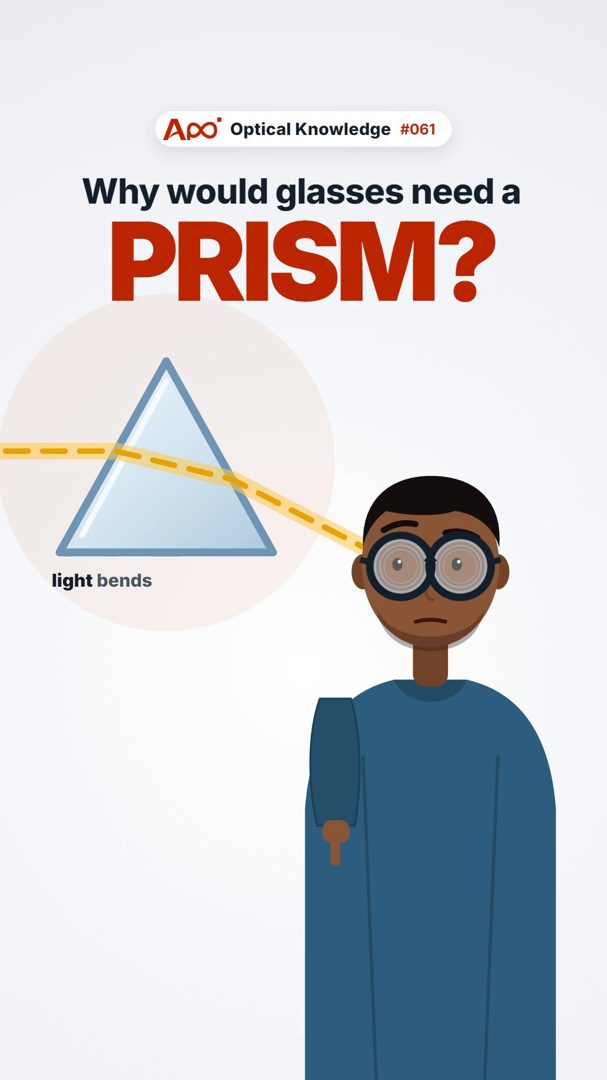
In 30 seconds
- When the eyes don't line up, each eye sends its own picture, which can mean double vision.
- A prism bends light toward its thick edge (the base), so the image moves toward the thin edge (the apex).
- Prism is measured in prism dioptres: 1 Δ moves the image 1 cm at 1 metre.
Learn the terms
Read: Glossary of optical terms
Run an optical shop? See what Asaan Optics does for opticians, or get the app:


Transcript
Why would glasses need a prism?
Eyes that don't line up send two pictures: double vision.
A prism bends light toward its thick edge, the base.
So the image moves toward the apex.
One prism dioptre: one centimetre at one metre.
Prism doesn't focus; it lines the pictures up.
New double vision? See an eye doctor straight away.
Learn more in our free optical glossary.
Question and answer
Why would glasses need a prism?
When the eyes don't line up, each eye sends its own picture, which can mean double vision. A prism bends light toward its thick edge (the base), so the image moves toward the thin edge (the apex). Prism is measured in prism dioptres: 1 Δ moves the image 1 cm at 1 metre.
Sources
- American Academy of Ophthalmology
- OpenExamPrep; All About Vision
- OpenExamPrep; All About Vision
- Optometrists.org; AAO
- as row 1
General education, not medical advice. See your optician or eye doctor about your own eyes. Disclaimer