In 30 seconds
- What BVD is and where it is measured from.
- How opticians measure it, often with a distometer.
- Why it matters for strong lenses: −8.00 D refracted at 12 mm needs about −8.13 D (rounded −8.25 D) if the frame sits at 14 mm.
Free tool from this video
Try it in the free Vertex Distance & Effective Power (BVD) Calculator
Run an optical shop? See what Asaan Optics does for opticians, or get the app:


Transcript
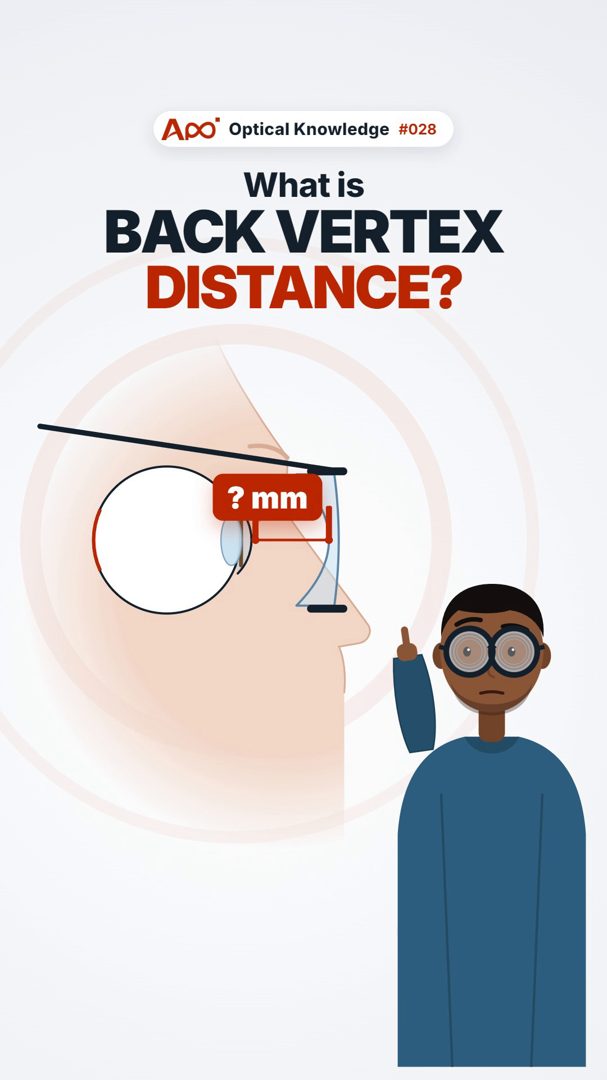
What is back vertex distance?
It's the gap between the back of your lens and your eye.
Usually twelve to fourteen millimetres.
Your optician measures it, often with a distometer.
Move a strong lens further away, and its effect changes.
At −8.00, two millimetres further out needs a quarter more minus.
That's why frame fit matters for strong prescriptions.
Try our free vertex distance calculator.
Question and answer
What is back vertex distance?
What BVD is and where it is measured from. How opticians measure it, often with a distometer. Why it matters for strong lenses: −8.00 D refracted at 12 mm needs about −8.13 D (rounded −8.25 D) if the frame sits at 14 mm.
Sources
General education, not medical advice. See your optician or eye doctor about your own eyes. Disclaimer