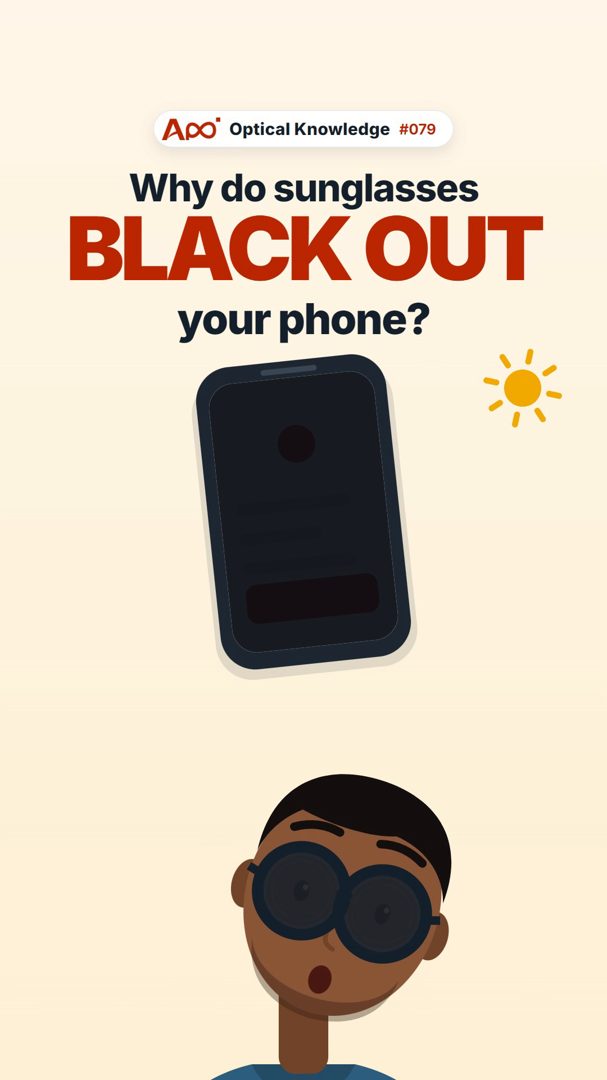
In 30 seconds
- Normal light vibrates in all directions. Glare reflected off flat surfaces (glass, metal, water) is mostly horizontal.
- A polarized lens works like a vertical slit: vertical light passes, the horizontal glare is blocked.
- Many LCD screens give off polarized light too. Tilt your head and the two filters cross, so the screen looks dark (not every screen does this).
Learn the terms
Read: Glossary of optical terms
Run an optical shop? See what Asaan Optics does for opticians, or get the app:


Transcript
Why do sunglasses black out your phone?
Normal light vibrates in all directions. Glare off flat surfaces is mostly horizontal.
A polarised lens acts like a vertical slit, blocking that glare.
Many screens give off polarised light. Tilt your head, the filters cross: dark screen.
Rotate them at a screen: if it darkens, they're polarised.
Learn the terms in our free optical glossary.
Question and answer
Why do sunglasses black out your phone?
Normal light vibrates in all directions. Glare reflected off flat surfaces (glass, metal, water) is mostly horizontal. A polarized lens works like a vertical slit: vertical light passes, the horizontal glare is blocked. Many LCD screens give off polarized light too. Tilt your head and the two filters cross, so the screen looks dark (not every screen does this).
Sources
- American Academy of Ophthalmology, "What Are Polarized Lenses?" (D. Turbert, reviewed by J. Kevin McKinney, MD, 7 Jul 2026)
- All About Vision, "Polarized lenses" (Erinn Morgan, updated by Allie Johnson; reviewed by Chloe Tauaefa, ABOC; reviewed 4 Nov 2026, updated 10 Nov 2026)
- OpenStax, College Physics 2e, 27.8 Polarization (Rice University)
General education, not medical advice. See your optician or eye doctor about your own eyes. Disclaimer