In 30 seconds
- Evening light, especially blue light, suppresses melatonin and can shift your body clock later. In a Harvard study, blue light shifted body clocks by 3 hours, green light by 1.5 hours.
- Blue-blocking glasses for sleep: a 2023 Cochrane review of 6 sleep trials (148 people) found mixed results; the evidence is very uncertain.
- What helps: limit screens in the 2–3 hours before bed, use night mode, and get bright light during the day.
Learn the terms
Read: Glossary of optical terms
Run an optical shop? See what Asaan Optics does for opticians, or get the app:


Transcript
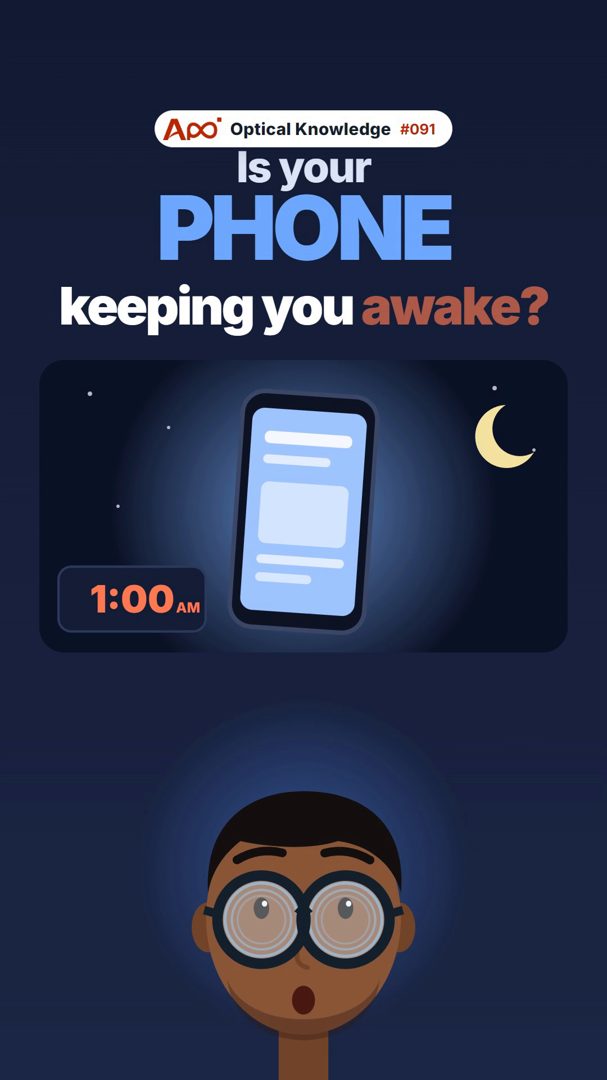
Is your phone keeping you awake?
Evening light, especially blue, holds back melatonin, and can push your body clock later.
Blue-blocking glasses for sleep? A 2023 Cochrane review found mixed results, and uncertain evidence.
What helps: limit screens two to three hours before bed, try night mode, and get bright light by day.
Learn lens terms in our free optical glossary.
Question and answer
Is your phone keeping you awake?
Evening light, especially blue light, suppresses melatonin and can shift your body clock later. In a Harvard study, blue light shifted body clocks by 3 hours, green light by 1.5 hours. Blue-blocking glasses for sleep: a 2023 Cochrane review of 6 sleep trials (148 people) found mixed results; the evidence is very uncertain. What helps: limit screens in the 2–3 hours before bed, use night mode, and get bright light during the day.
Sources
- Harvard Health Publishing, "Blue light has a dark side", 24 Jul 2024, reviewed by Howard E. LeWine, MD —
- AAO, "Should You Be Worried About Blue Light?", reviewed by Rahul N Khurana, MD, 10 Mar 2021 —
- cochrane.org
General education, not medical advice. See your optician or eye doctor about your own eyes. Disclaimer