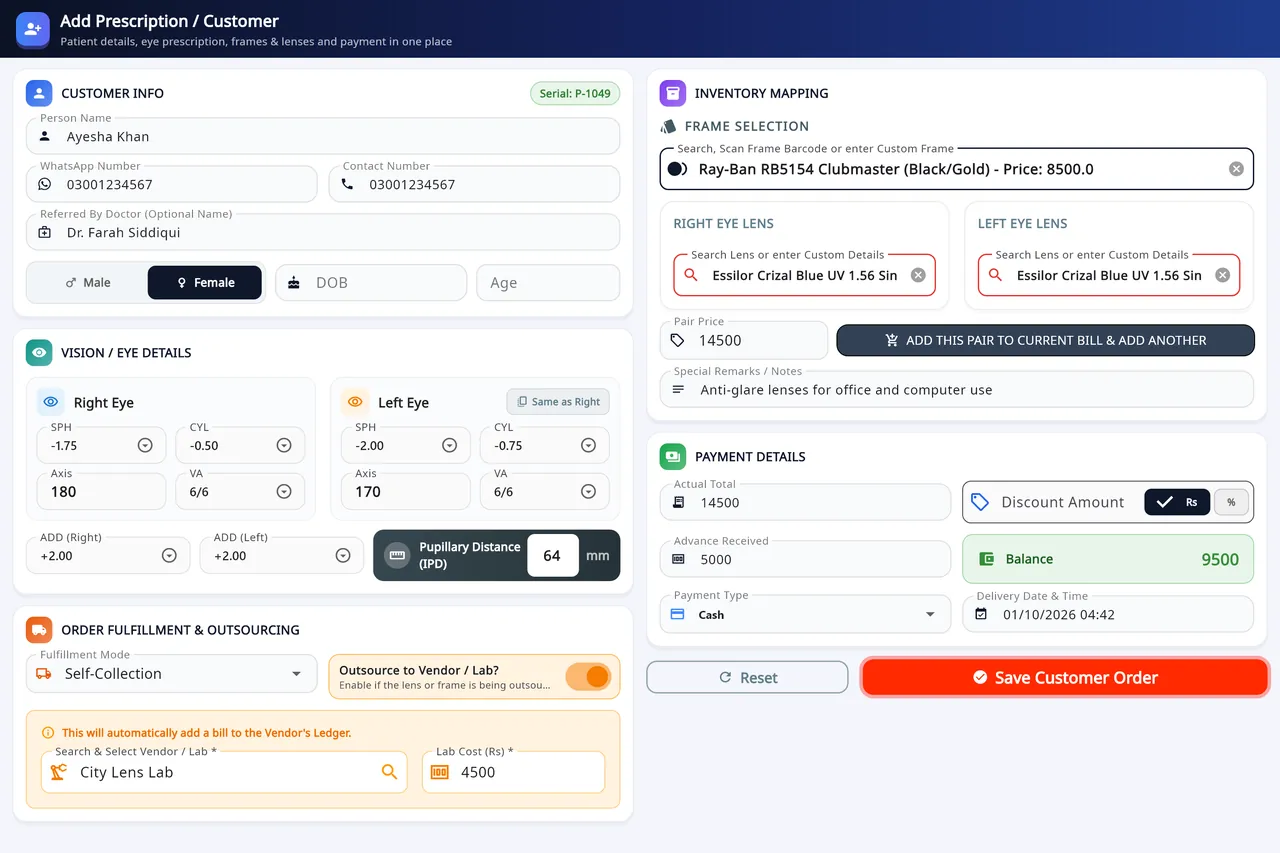
The fields, and how each is written
| Field | What it is | How it is written |
|---|---|---|
| SPH (sphere) | The main power of the lens, for short or long sight. | With its sign, plus or minus, in steps of 0.25: -2.25, +1.50. Plano (PL) is 0.00. |
| CYL (cylinder) | The extra power that corrects astigmatism. | With its sign, in steps of 0.25. Leave it empty or 0.00 if there is none. |
| AXIS | The direction of the cylinder. | A whole number from 1 to 180, in degrees. Only used with a cylinder. |
| ADD (addition) | The extra plus power for near vision. | Always plus, for example +2.00, and normally the same for both eyes. |
| PD | The distance between the pupil centres. | In millimetres, for example 64, or one value for each eye. |
| VA | Visual acuity measured with the correction. | As written by the examiner, for example 6/6 or 20/20. |
Each term is explained in the optical glossary and in how to read an eye prescription.
Entering a prescription, step by step
- 1
Start with the right eye
Prescriptions list the right eye (OD, or R) first. Enter it first every time, so the order never changes.
- 2
Type the sphere with its sign
A missing minus sign is the commonest mistake.
- 3
Type the cylinder and axis as written
Do not change plus cylinder to minus in your head. If the lab needs the other form, use the transposition calculator and check the result.
- 4
Add the ADD and the PD
The ADD goes in its own field, never added into the sphere.
- 5
Enter the left eye
Copy from the right eye only when the two really are the same, then read both rows against the slip.
- 6
Save it on the order
The prescription is saved with the frame, the lenses and the payment, and printed on the receipt.

Six mistakes to check for before you save
A dropped minus sign
-2.00 saved as 2.00 makes plus lenses. Read the sign aloud when you check.
Right and left swapped
Keep the same order as the slip, right eye first.
Mixed cylinder forms
One eye in plus cylinder and the other in minus. Keep both as written, or transpose both.
An axis with no cylinder
An axis means nothing without a cylinder. If one is missing, ask the prescriber.
ADD typed into the sphere
The lab then makes the wrong distance power. The ADD has its own field.
Guessing an unclear figure
If the handwriting is unclear, phone the clinic. Do not guess.
To convert between plus and minus cylinder, use the transposition calculator.
Entering or scanning it on the phone
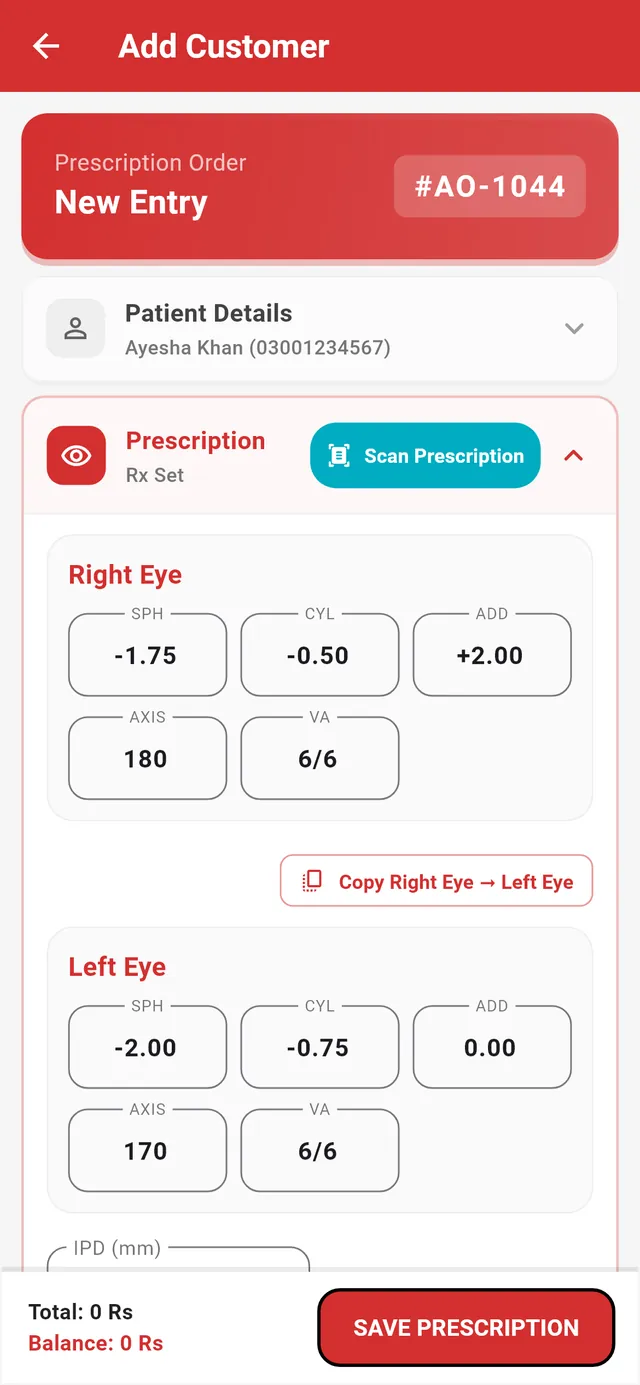

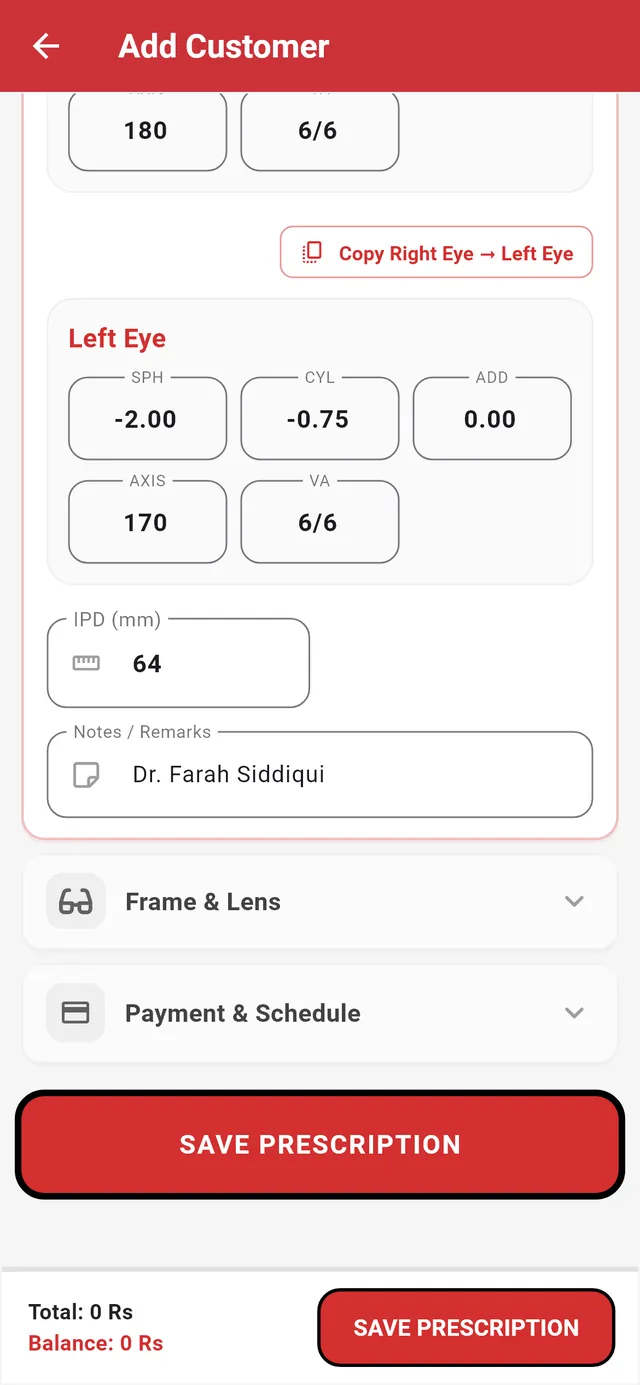
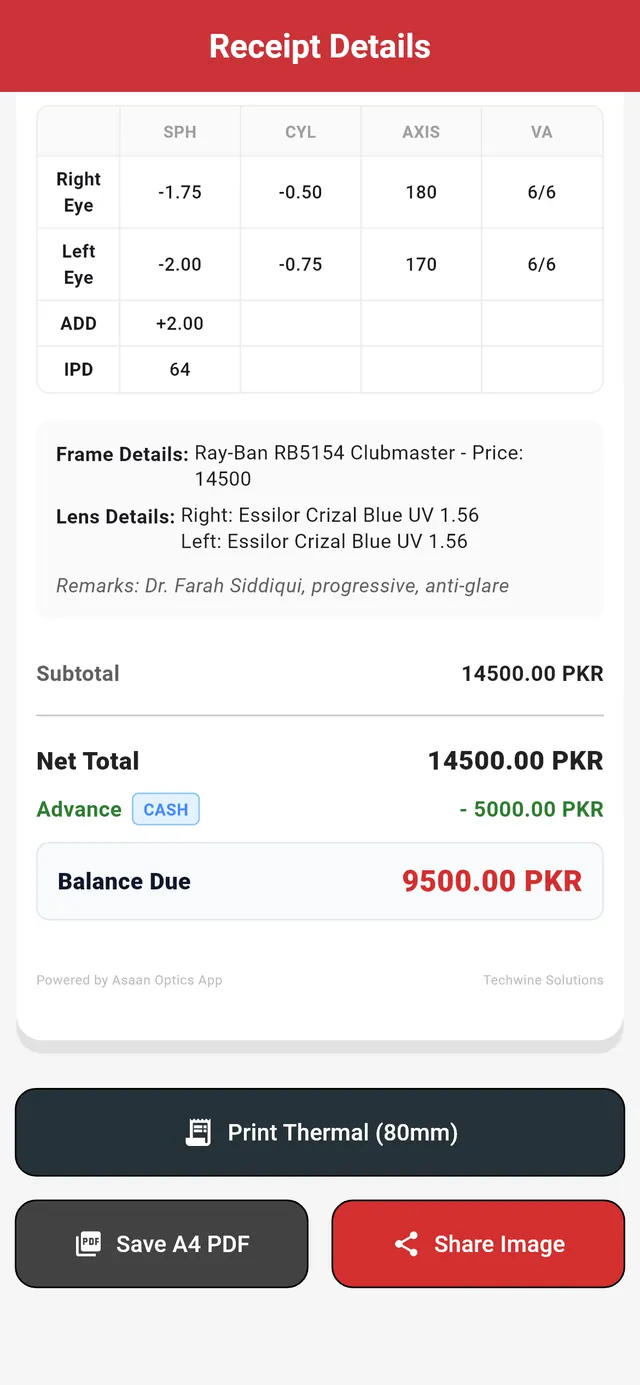
Scan Prescription uses text recognition on the phone. It is in the Android app only, and it can misread handwriting, so every value has to be checked. Demo data in all pictures. The Android app
Questions
Should I enter the prescription in plus or minus cylinder?
Enter it as it is written, so the record matches the slip. If your lab orders in the other form, transpose it with a calculator: add the sphere and cylinder for the new sphere, change the sign of the cylinder, and turn the axis by 90 degrees.
What do I enter when the prescription says plano or PL?
Plano means no spherical power. Enter 0.00 in SPH and then the cylinder and axis, if there are any.
What if the prescription has a cylinder but no axis?
The lens cannot be made without the axis. Ask the prescriber; do not guess and do not copy the other eye.
Can software read a handwritten prescription?
In the Asaan Optics Android app, Scan Prescription photographs the slip and fills SPH, CYL, AXIS and ADD using text recognition on the phone. It saves typing but can misread handwriting, so you check each value before saving. The Windows program does not have it.
 Prescriptions and orders
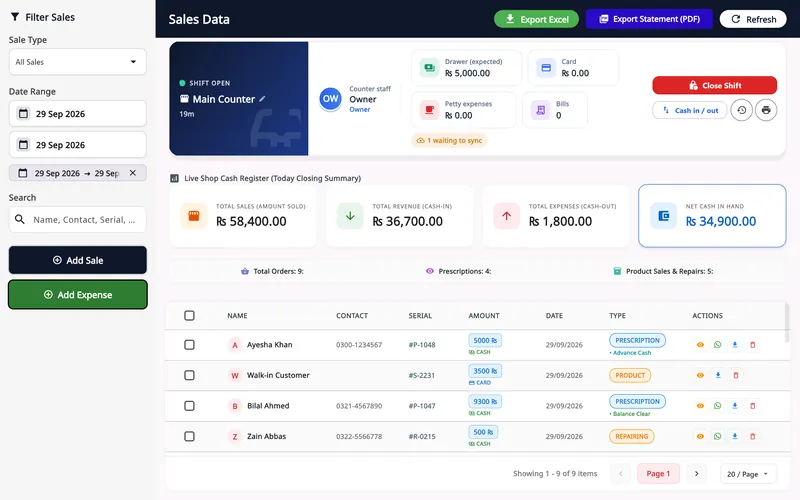 Optical shop software prices
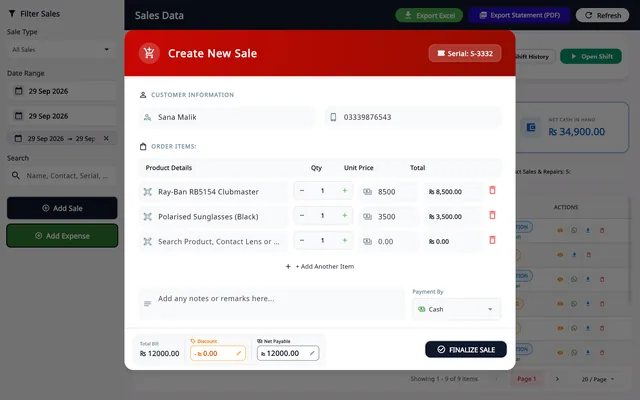 POS for an optical shop
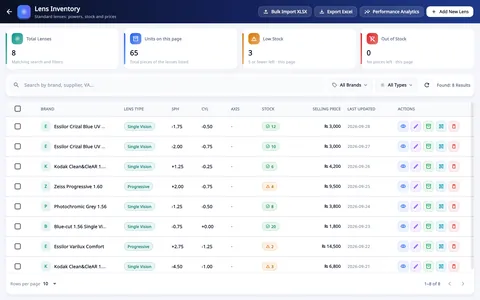 Organizing lens stock